Most people who walk into our Display Center in Shela want a kitchen counter that looks like marble but behaves like granite. That is exactly the gap natural quartzite fills. Here is an honest comparison of the three stones for Indian kitchens, so you can choose with confidence.
The short answer
- Granite is the most practical and usually the most economical. It shrugs off heat, haldi and lemon.
- Quartzite gives you the soft, flowing veins of marble with hardness close to granite. It costs more than most granites.
- Marble is the most beautiful and the most delicate. It etches with acids and needs more care, so it suits people who love a natural patina.
Look and character
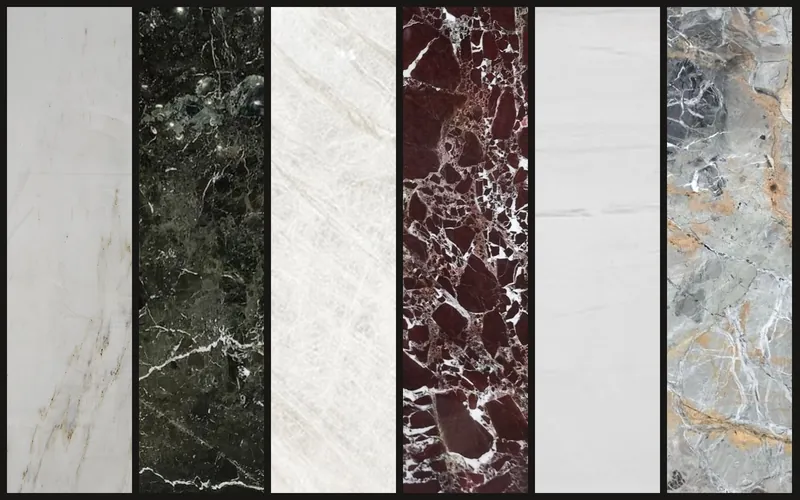
Marble has the deepest, most luminous veining: think Statuario, Carrara and Calacatta-style whites. Quartzite can look remarkably similar, with light grounds and gentle movement; Taj Mahal quartzite is the best-known example, warm cream with soft gold veins. Granite is usually speckled or uniform, from Black Galaxy with golden flecks to jet-black Absolute Black, with some dramatic “movement” granites for statement islands.
Scratches and hardness
On the Mohs hardness scale, marble sits around 3, granite around 6–7 and true quartzite around 7. In daily use that means knives and steel utensils can scratch marble, while granite and quartzite resist them. Some stones sold as “soft quartzite” are closer to marble in behaviour, so ask for a scratch test on an offcut before you buy.
Stains and acids
This is where the stones differ most in an Indian kitchen. Marble is calcium carbonate, so lemon, vinegar, tamarind and tomato can leave dull etch marks within minutes. Granite and quartzite are not etched by these acids. Light-coloured stones of any type can absorb oil and turmeric if left unsealed, so sealing matters for pale granites and quartzites too.
Heat
All three are natural stones and tolerate heat far better than resin-bound engineered quartz. Granite and quartzite handle hot vessels very well; marble does too, but a trivet is a good habit for any stone because sudden, concentrated heat can stress a slab.
Sealing and care
- Granite: dense dark granites rarely need sealing; lighter granites benefit from sealing after installation.
- Quartzite: seal after installation and periodically, depending on porosity.
- Marble: seal regularly, wipe acidic spills immediately and use pH-neutral cleaners. Polished marble can be re-polished on site when it dulls.
Budget
Common Indian granites are generally the most affordable. Quartzite is usually priced above most granites because it is harder to quarry, cut and polish. Marble varies the most: some Indian marbles are economical, while premium Italian marble can be the most expensive option. Fabrication (edges, sink and hob cut-outs, waterfall ends) and slab thickness also change the final price.
Where each stone works best
- Busy family kitchen: granite, or quartzite if you want a lighter, marble-like look.
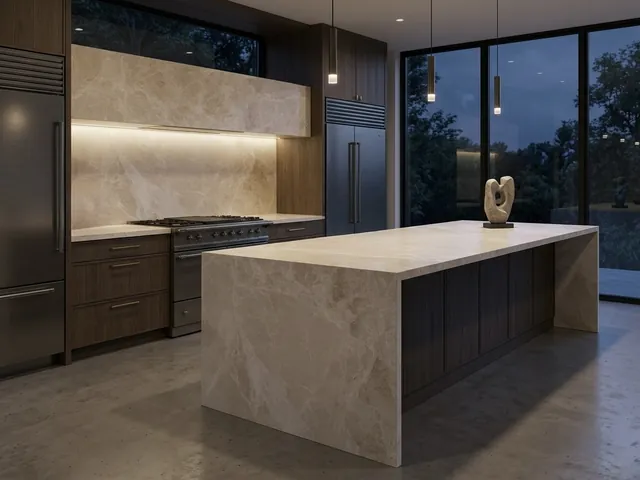
- Show kitchen or island: quartzite or marble, book-matched for maximum effect.
- Bathroom vanities: any of the three; marble and quartzite are the most popular.
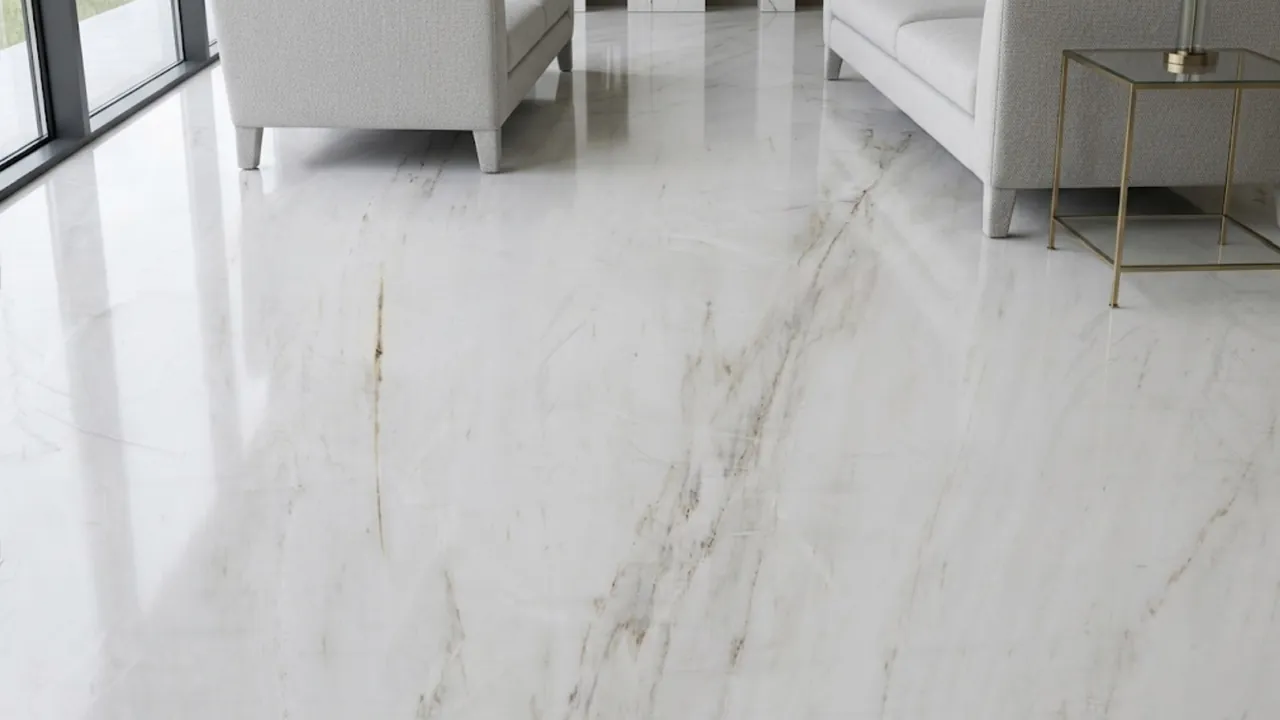
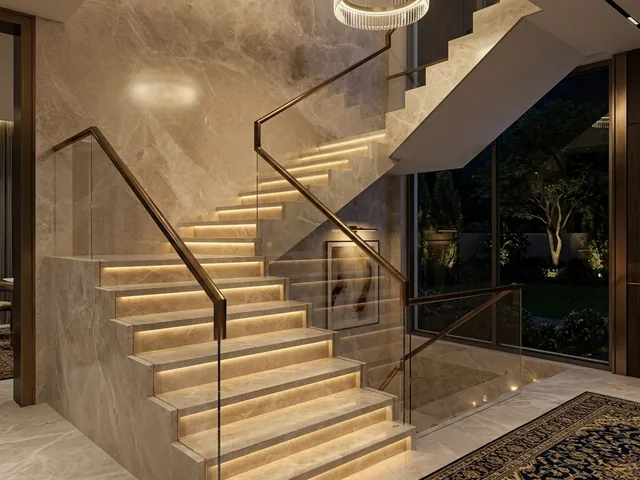
- Floors and walls: marble remains the classic choice for living areas, with granite for high-traffic and exterior areas.
How to decide
- Be honest about how you cook. Heavy daily cooking points to granite or quartzite.
- See full slabs, not small samples, because veining changes across a slab.
- Ask for a scratch and acid test on an offcut.
- Plan joints and cut-outs before cutting, so the pattern flows.
Visit our Display Center in Shela to compare quartzite, marble and granite side by side. We supply and install all three across Ahmedabad and Gandhinagar.
Quick answers
Is quartzite better than granite for a kitchen?
Both are very durable. Quartzite gives a lighter, marble-like look with similar hardness; granite is usually more economical and comes in more speckled and dark options.
Can I use marble for a kitchen counter in India?
Yes, if you accept that acids like lemon and tamarind can etch it and you are happy to seal it regularly. Many people choose quartzite instead for a similar look.
Is quartzite the same as quartz?
No. Quartzite is a natural stone; quartz countertops are an engineered product made from crushed quartz and resin.